

Welcome to the odaswa (Operative for Dissemination of Academic Scholarly Works to All) Journal, your gateway to a dynamic and collaborative realm where the frontiers of engineering, technology, science, and management converge. As a non-profit, open-source publisher, odaswa is dedicated to fostering a global community of scholars who share a passion for advancing knowledge in these critical fields. Read more
Beyond the Journal :: Blog
How Scientific Writing is rapidly changing with AI, Automation, Data Transparency and new tools that improve accuracy and global communication
Scientific writing has entered a transformational stage. Earlier, scientific writing was slow, manual, tedious, and highly dependent on individual researcher’s writing talent. Today, modern digital tools and AI-based writing support systems are helping researchers communicate their findings more clearly, more rapidly and in more globally acceptable formats. These advancements are not reducing quality. They are actually increasing clarity, correctness, citation accuracy and cross-discipline readability. However, researchers must still preserve scientific integrity, originality and ethical standards while using these new tools.
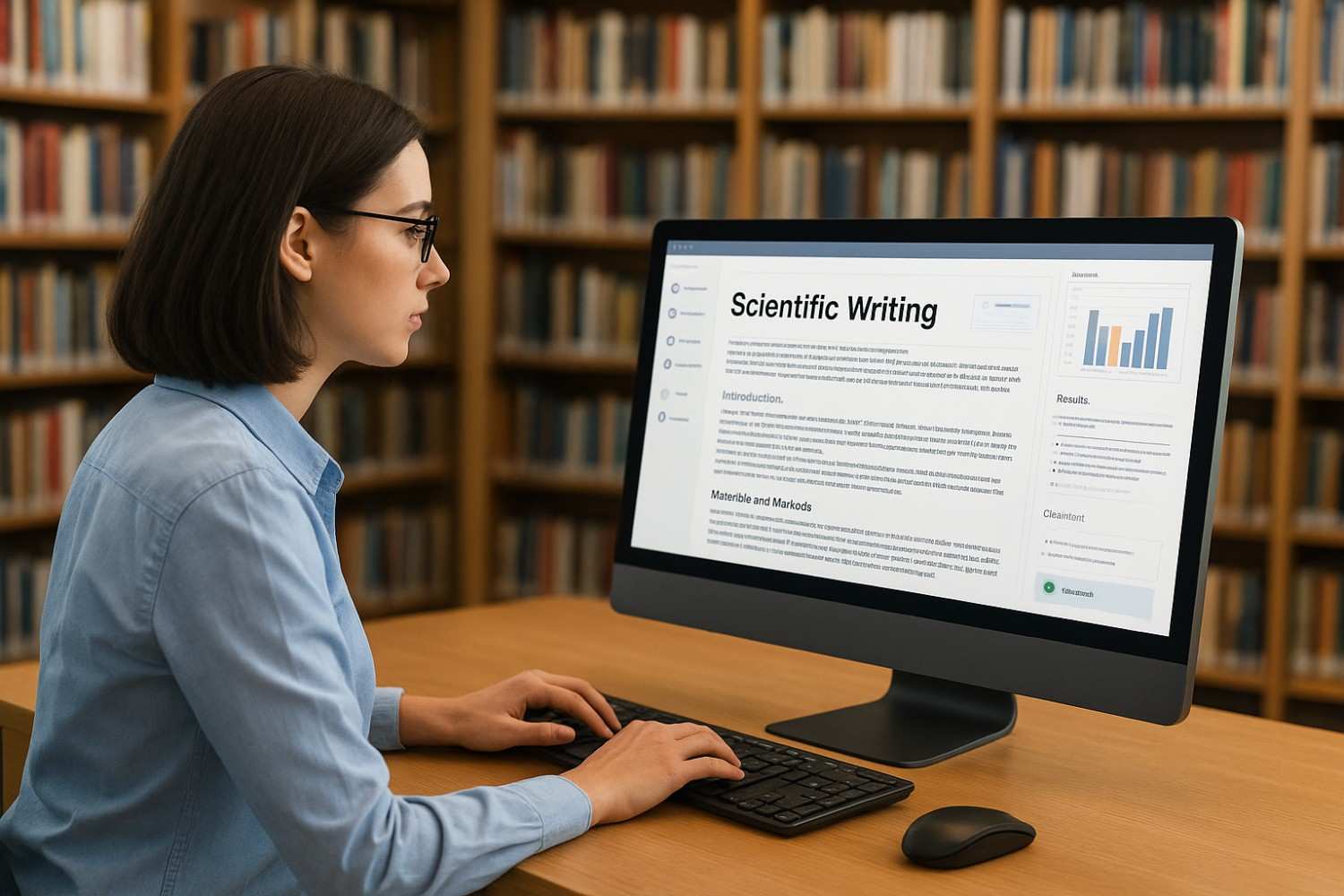
AI and language tools are removing linguistic barriers
In the past, many brilliant researchers from non-English speaking countries faced rejection because of poor language or unclear articulation. But now, grammar engines, academic paraphrasers, summarizers, automated citation checkers, and terminology recommenders help scientists convert raw data into a publication-ready narrative. This reduces linguistic disadvantages and promotes global participation. Even rural and tier-2 research teams can now prepare publication level text with high confidence and consistency.
Data-driven writing increases accuracy and prevents misinterpretation
Advanced scientific writing involves structured data visualization, automated extraction of statistical outcomes, AI-interpretation cross-check of effect size, and automated reference verification. Instead of manually typing results, software now pulls coefficients, p-values, confidence intervals directly from data analysis outputs. This avoids human typing errors and intentional manipulation. Scientific writing hence becomes more reliable, transparent and reproducible.
Collaboration platforms speed up peer review and journal communication
Research writing is now more collaborative and cloud-based. Shared manuscript editors, version control, real-time contribution tracking, plagiarism alerts and journal-specific formatting bots help reduce revision cycles. Submission portals auto-check guidelines and generate compliance reports instantly. As a result, editorial time is decreasing, reviewer clarity is increasing, and publishing pipeline is becoming faster.
Scientific writing has shifted from pure manual writing to intelligent, tool-supported, evidence-linked writing. In the next 5–10 years, the scientific communication ecosystem will become even more automated, collaborative and globally fair.

This Content Sponsored by SBO Digital Marketing.
Mobile-Based Part-Time Job Opportunity by SBO!
Earn money online by doing simple content publishing and sharing tasks. Here's how:
- Job Type: Mobile-based part-time work
- Work Involves:
-
- Content publishing
- Content sharing on social media
- Time Required: As little as 1 hour a day
- Earnings: ₹300 or more daily
- Requirements:
-
- Active Facebook and Instagram account
- Basic knowledge of using mobile and social media
For more details:
WhatsApp your Name and Qualification to 9994104160
a.Online Part Time Jobs from Home
b.Work from Home Jobs Without Investment
c.Freelance Jobs Online for Students
d.Mobile Based Online Jobs
e.Daily Payment Online Jobs
#OnlinePartTimeJob #WorkFromHome #EarnMoneyOnline #PartTimeJob #jobs #jobalerts #withoutinvestmentjob